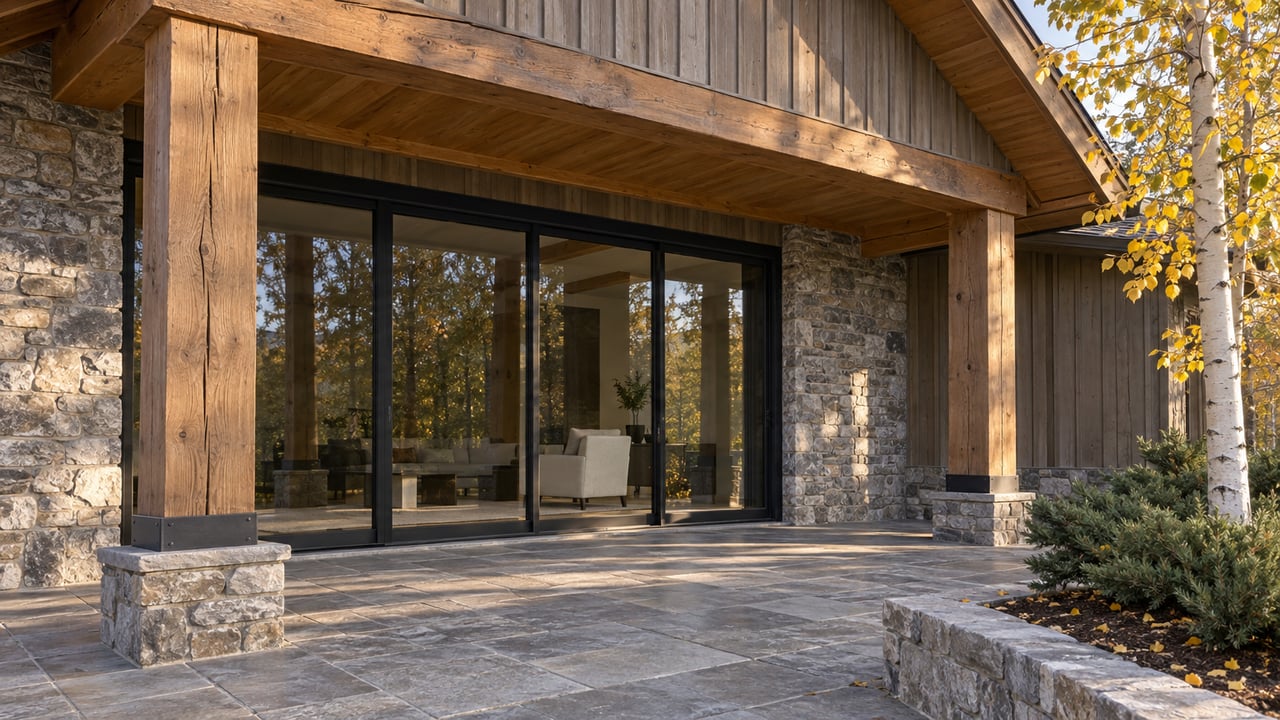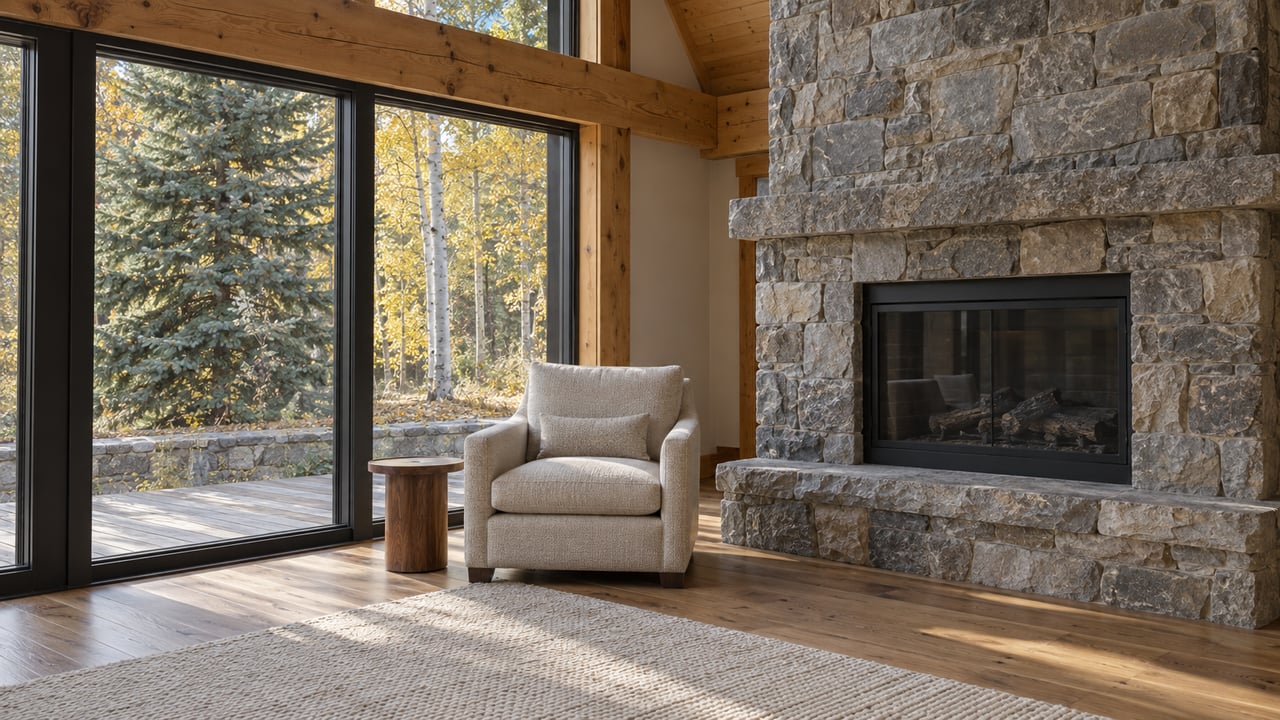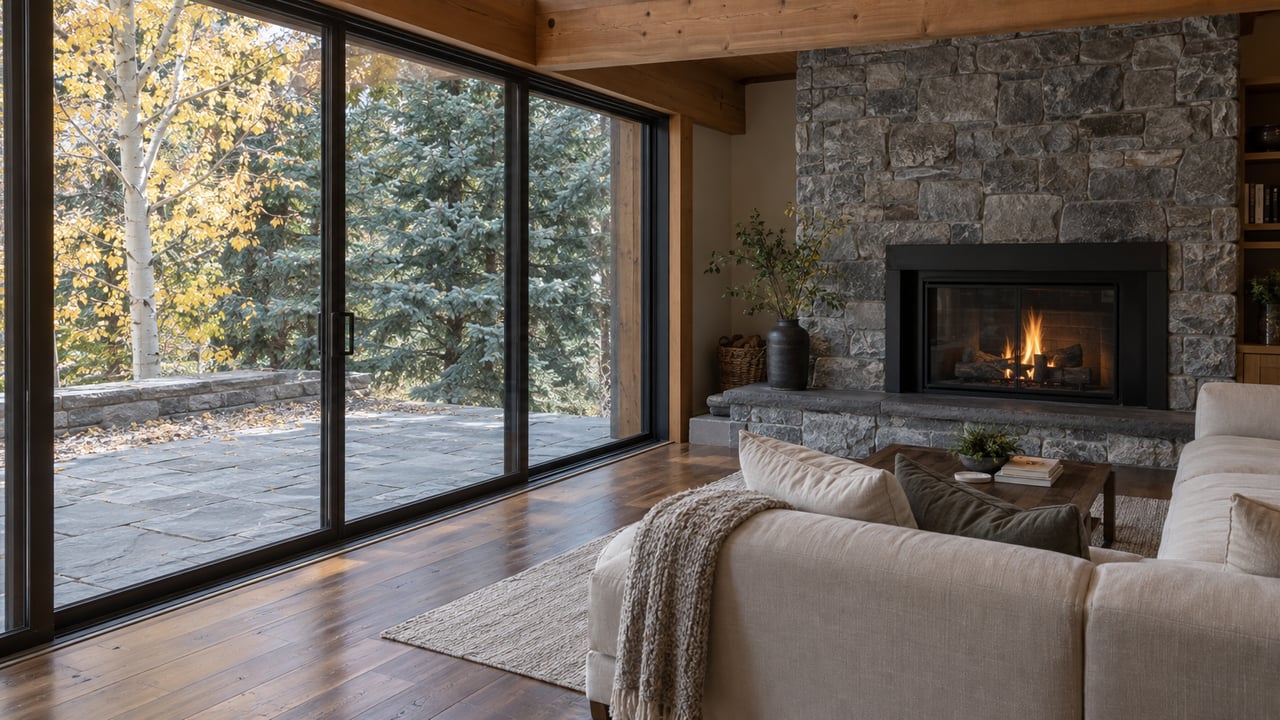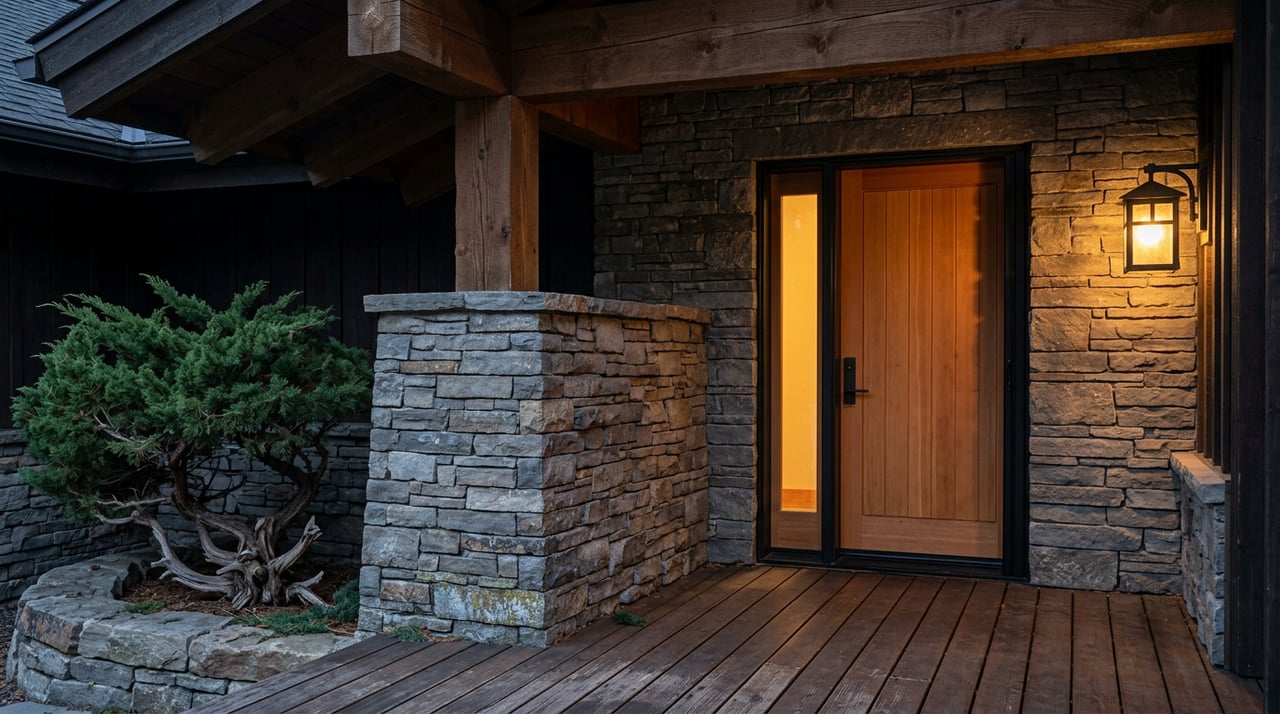
A buyer scrolling listings for the first time will hit a number that doesn't match the map. Teton Village sits at the base of Jackson Hole Mountain Resort, tram cable overhead, ski run practically touching the back deck. Wilson sits seven miles west, a crossroads with a general store and a bridge over the Snake River. Conventional resort logic says the property closer to the lift should cost more. As of early 2026, it hasn't. Wilson's median sale price over the preceding twelve months ran around $3.8 million, compared with roughly $2.81 million in Teton Village.
That gap is not a fluke of a few outlier sales. It is the surface of a zoning line most buyers never think to ask about until they are already under contract.
The Number That Doesn't Match the Map
Ski-in/ski-out access is the single most quoted premium in mountain real estate, and in most resort towns it holds. Jackson Hole is the exception, and the reason has nothing to do with the quality of either address.
| Wilson | Teton Village | |
|---|---|---|
| Median sale price, 12 months ending early 2026 | ~$3.8 million | ~$2.81 million |
| Minimum legal rental period | 31 days | Nightly (in designated resort zones) |
Land pricing tells the same story from a different angle. Across Teton County, land listed for sale averages roughly $534,471 per acre. In Wilson specifically, that average drops to about $372,570 per acre. Wilson land is, on a per-acre basis, cheaper than the county norm. Yet the finished homes sitting on that land carry a higher median price than condos and townhomes at the base of the mountain. Something other than dirt is doing the pricing work.
What a Nightly Rental Is Actually Worth Here
To understand why Teton Village trades at a discount to Wilson despite the ski access, it helps to know what a legal short-term rental is worth in this valley right now. Jackson Hole ranked as the top summer destination in the country for short-term rental bookings this year, with average daily rates running in the mid-$600s and climbing toward $750 during the July and August peak. Properties inside the valley's designated short-term rental overlay, which covers Teton Village, The Aspens, and a handful of specific Town of Jackson lodging zones, have been estimated to command roughly a 15 to 20 percent premium over otherwise comparable homes outside those zones, precisely because a buyer there is purchasing a legal income stream along with the walls and roof.
That premium is baked into the Teton Village price. It is also the reason Teton Village's median, while lower than Wilson's, is not really a discount at all once you account for what the property is licensed to do. A Teton Village condo is priced in part like a small hospitality asset. A Wilson home is not, because it legally cannot be.
The Line Wilson Sits on the Wrong Side Of
Teton County's Land Development Regulations prohibit renting a residential property for less than 31 days anywhere in the county, with exceptions carved out only for a short list of designated resort and lodging areas. Teton Village is on that list. Wilson is not. A homeowner in Wilson who lists a spare bedroom on a nightly booking site is not making a gray-area judgment call. They are violating a county ordinance that carries fines of up to $750 per day of noncompliance, enforced actively by the county's code compliance office.
Two houses. Similar acreage. One can legally host a different family every three nights through the summer. According to Teton County, the other cannot rent to anyone for less than a month, and even a guest house on the property is capped at a 90-day minimum unless the occupant works in the county or is family.
That single regulatory fact reframes the whole comparison. Teton Village's price reflects a home plus a business license. Wilson's price reflects a home plus land, and nothing else the county will let you monetize on a nightly basis.
So What Is Wilson Actually Selling
If Wilson's premium isn't rental income, it has to be something else, and the market has been telling us what for months. The strongest growth pocket in the entire valley through the first half of 2026 sits south of Wilson along Fall Creek Road, a two-lane corridor running through some of the area's largest private parcels. Transactions there jumped from 5 in the same period a year earlier to 14 in the first six months of 2026, the sharpest year-over-year increase of any submarket in Jackson Hole.
The corridor is a stretch of named neighborhoods, not a single subdivision, and the names matter because they explain what buyers are actually paying for: Highland Park, Crescent H Ranch, Teal Trace, Pine Meadow, Rivermeadows, Indian Paintbrush, Stilson Ranch, and Riverview Ranch. Several border the Bridger-Teton National Forest directly. Several carry frontage or access to the Snake River and its spring creeks.
Crescent H Ranch is worth pausing on. It began in 1927 as a 1,500-acre dude ranch, and in 1963 the family that owned it split the property into a 750-acre ranch and recreation easement alongside 750 acres divided into 42 homesites. That structure, half the land permanently protected from further development, half sold as private parcels, is part of why homes there and along the rest of Fall Creek Road carry a scarcity value that has nothing to do with proximity to a chairlift. Buyers are not purchasing convenience. They are purchasing acreage that borders land which by design can never be subdivided further, in a county where 97 percent of all land is federally owned or under conservation easement to begin with.
That is the actual product Wilson sells at a premium: privacy, adjacency to protected open space, and enough acreage that the nearest neighbor is a genuine walk away. None of that shows up as a rental yield. All of it shows up in the sale price.
What This Means If You're Comparing the Two
For a buyer weighing Teton Village against Wilson, the decision is really a question about what kind of asset you want to own. A Teton Village purchase is a resort-zoned property with a legal path to nightly income, HOA-managed amenities, and walkable access to the mountain, and its price already has that rental capacity priced in. A Wilson purchase is a private land holding first and a home second, priced for owner use, seasonal privacy, and long-term land scarcity rather than for turnkey income.
Neither is the better financial instrument in the abstract. They are different instruments. A buyer who wants ski-day convenience and doesn't need nightly rental flexibility may find Teton Village's lower median price genuinely attractive once they price in HOA dues and shared-wall living. A buyer drawn to acreage, river access, and the kind of quiet that comes from bordering a national forest will understand why Wilson, and Fall Creek Road in particular, keeps commanding more per closing even without a rental license attached.
A Few Questions Worth Asking Before You Choose
Can a Wilson property ever get approved for short-term rental? Only if it falls within one of the county's specifically designated resort or lodging zones, which Wilson generally does not. Anyone considering a Wilson purchase with rental income in mind should verify zoning status directly with the county planning department before assuming any flexibility exists.
Does Wilson's higher median mean the homes themselves are more expensive to build or larger? Not necessarily. Wilson's land trades cheaper per acre than the county average. The premium sits in lot size, water frontage, and adjacency to protected forest land rather than in raw construction cost.
Is the Fall Creek Road surge likely to continue? A jump from 5 to 14 transactions in the first half of 2026 is a meaningful shift in a market this size, and it reflects genuine buyer demand for that corridor's combination of privacy and access. Whether that pace holds depends on how much inventory the handful of legacy ranch parcels along the road release in coming quarters, which is a question best answered property by property rather than by trend line alone.
Comparing Wilson and Teton Village on price alone will always produce a confusing answer, because the two numbers are measuring different things. One reflects a legal income stream. The other reflects land that will likely never come available again in the same configuration. Knowing which one you're actually buying, before you make an offer, is the difference between a smart purchase and a surprised one.
If you're weighing Wilson against Teton Village, or trying to make sense of what a given price actually reflects once zoning and land value are accounted for, Jake Kilgrow has spent the better part of 25 years reading these distinctions across the valley. Work with Jake to get a clear read on what a property's price is actually telling you before you write the offer.
This article is general information, not legal, tax or financial advice. Consult a qualified professional about your situation.