If you are selling an estate or acreage property south of Jackson, a standard listing plan is rarely enough. Buyers in this part of Teton County are not just comparing square footage or finishes. They are studying land use, access, privacy, views, water, and what the parcel can realistically support over time. A smart strategy helps you present the property clearly, price it credibly, and reduce avoidable surprises before a buyer ever asks their first hard question. Let’s dive in.
Why South of Jackson Needs Its Own Strategy
South of Jackson is not a one-size-fits-all market. In Teton County planning documents, South Park and the Southern Highway 89 corridor are treated as distinct areas where growth, open space, scenic character, and wildlife movement all matter.
That matters for your sale because buyers tend to view these properties as both lifestyle assets and land assets. They may care about the home, but they are also weighing how the parcel sits in the corridor, how it functions day to day, and what long-term limitations or opportunities come with it.
For some properties, proximity to Jackson and existing infrastructure adds value. For others, the appeal is a lower-density setting, agricultural use, or a more private rural feel. In either case, your listing strategy should reflect the land itself, not just the residence built on it.
Market Conditions Favor Precision
The current market points to a selective environment, especially for land and estate-style properties. A local Q1 2026 market report showed 9 sales in the land-and-ranches segment, with an average sale price of $5.48 million, 55 active listings, and an average 173 days on market.
Countywide figures support the same general pattern. Over the three months ending in April 2026, Redfin reported a median sale price of $2.64 million and 193 median days on market in Teton County, while Zillow reported a median list price of $3.02 million and 155 active listings as of April 30, 2026.
What does that mean for you as a seller? Buyers are active, but they are careful. They are taking time, comparing options closely, and paying attention to details that affect use, cost, and future flexibility.
Price the Parcel, Not Just the House
One of the biggest mistakes in this submarket is relying too heavily on broad countywide pricing averages. Those numbers can offer context, but they do not tell the full story for acreage south of Jackson.
In this segment, value often turns on parcel-specific factors such as:
- Jurisdiction and zoning
- Access and frontage
- Views and privacy
- Water features and required buffers
- Septic status or feasibility
- Water rights and well documentation
- Agricultural classification status
- Existing improvements such as barns, guest structures, corrals, fencing, and drives
Two properties with similar home sizes can trade very differently if one has clearer development parameters, stronger usability, or fewer regulatory constraints. That is why a strong pricing strategy starts with comparable properties, then adjusts for actual entitlements and limitations.
Start With Jurisdiction and Rules
Before your property goes to market, confirm whether it is in unincorporated Teton County or inside the Town of Jackson. The county identifies its GIS map as the recommended starting point, and this is more than a technical detail because the town and county follow different rules.
For larger properties, buyers often ask early questions about what can be improved, changed, or rebuilt. If you cannot answer those questions with confidence, the listing may feel speculative instead of well prepared.
Fire and development rules are also important. Teton County says that as of January 1, 2025, all private land parcels in Teton County and the Town of Jackson fall within the adopted Wildland Urban Interface map, and the Town and County use the 2024 fire code and WUI code.
Resolve Key Due Diligence Early
For estates and acreage parcels, pre-listing work is usually more important than cosmetic touch-ups. Beautiful photography helps, but the real confidence builder is documentation.
A strong pre-market diligence file may include:
- Jurisdiction confirmation
- Zoning information
- Survey or easement exhibits
- Natural Resource Assessment review status
- Septic permits or system records
- Water rights records
- Well permits or related files
- Agricultural classification status, if applicable
- Fence and utility information
When this material is assembled in advance, buyers can evaluate the opportunity more efficiently. That often leads to better-quality inquiries and fewer surprises during escrow.
Natural Resource Assessment Matters
Effective May 1, 2025, Teton County requires a Natural Resource Assessment before any physical development permit or new use in the county. The county describes Base-Tier, Mid-Tier, and High-Tier review paths.
For sellers, this matters because buyers considering future improvements may want to understand whether the parcel could face a more involved review process. Even if no immediate changes are planned, knowing the property’s status helps shape expectations.
Septic Questions Come Early
If your property uses a private wastewater system, be ready for detailed questions. Teton County says septic permits are submitted online, profile holes and percolation tests may be required, and no new systems can be installed from November 15 through April 15.
The county also requires precast concrete two-compartment septic tanks for new systems. For a buyer, septic clarity is not a side issue. It is a core part of understanding function, timing, and possible future improvements.
Water Rights and Wells Need Clarity
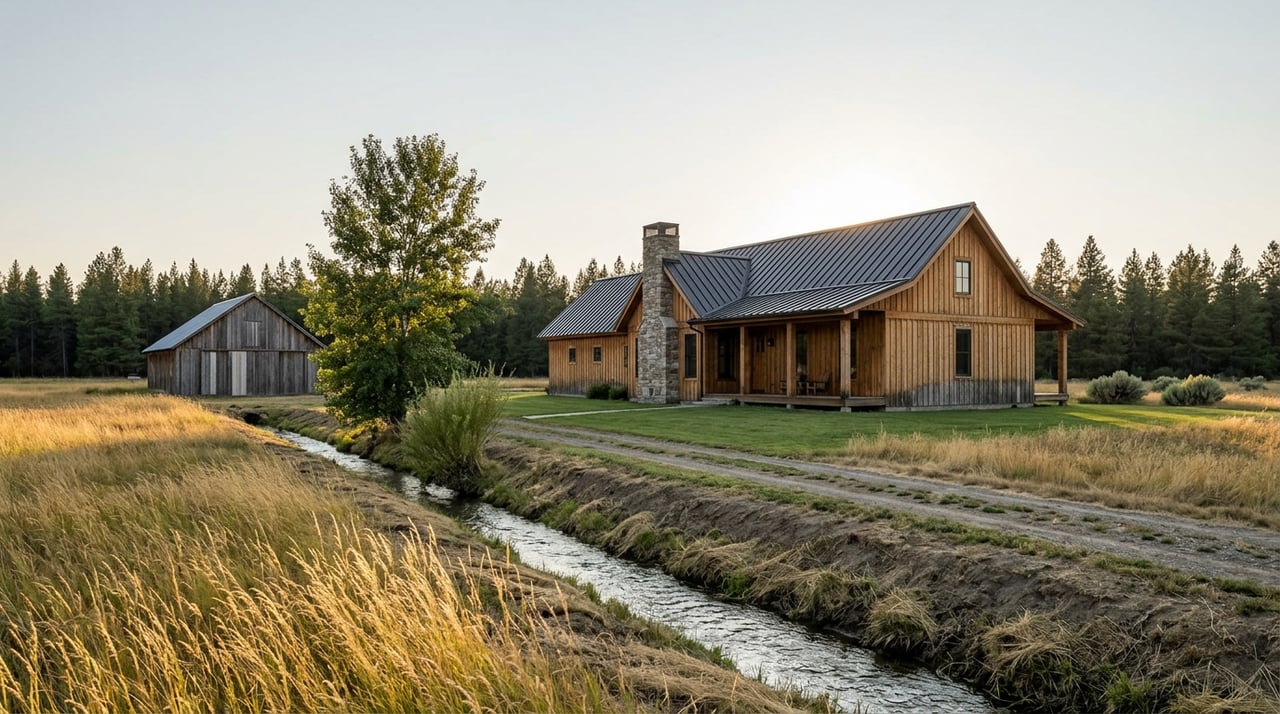
Water can be one of the most misunderstood features on acreage. Teton County states that all water is owned by the State of Wyoming, and a ditch or stream crossing does not automatically mean the owner has usable rights.
The Wyoming State Engineer adds that water rights transfer with the sale of the property they are attached to, and a permit is required before constructing a well or using underground water. If your property includes irrigation, a pond, a well, or visible surface water, clear records can make a major difference in buyer confidence.
Watch for Waterbody Buffers and Site Limits
Water features can be a major asset, but they can also come with strict limits. Teton County requires setbacks of:
- 150 feet from rivers
- 100 feet from perennial or intermittent streams and natural lakes or ponds
- 30 feet from ephemeral streams
- 50 feet from wetlands
The county requires these buffer areas to remain free of development and to maintain native vegetation. If your parcel includes ponds or drainage features, buyers will want to know what is scenic, what is usable, and what is restricted.
This is one reason acreage listings need careful language. A strong listing presents the beauty of the land while also clearly defining how the parcel functions in reality.
Show How the Land Works
The best listing for an estate south of Jackson tells a land-use story. Teton County defines site development broadly to include buildings, driveways, patios, corrals, outdoor storage, and stockpiles, which means buyers are often evaluating the full operating footprint of the property.
That is especially true if your parcel includes:
- Horse facilities
- Barns or agricultural structures
- Guest houses
- Ponds
- Long private drives
- Fenced pastures or working areas
In these cases, the marketing should show more than architecture. It should show approach, orientation, circulation, usable land, and the relationship between structures and open space.
Media Should Add Context
For this submarket, aerials are often essential because they show the parcel in context. Ground photography should then support that view by showing the arrival sequence, build site, major improvements, and key view corridors.
For Highway 89 frontage properties, presentation also matters because the county’s future land-use vision treats the corridor as a gateway into town. For South Park and nearby areas, the planning emphasis on open space, scenic character, and wildlife movement supports clean, restrained marketing that focuses on what is real and usable.
In practical terms, the strongest media package usually includes:
- Aerial imagery showing boundaries and context
- Ground photography of the home and site improvements
- Wide landscape images that show views and open space
- Clear captions that distinguish usable features from purely scenic ones
Address Fencing, Utilities, and Improvements
Smaller details can become major negotiation points if they are not addressed early. Teton County notes that wildlife-friendly fencing is exempt from permits when it meets county standards, but new fencing still has to follow county height and spacing rules.
Utilities also matter. The county says utilities must be installed underground, and grading or erosion work can trigger permits. If your property has had site work, expanded drives, or newer improvements, it is smart to confirm what records are available before launch.
These details help buyers understand not only what exists today, but also how carefully the property has been managed.
Be Clear About Agricultural Classification
If your parcel is represented as agricultural land, accuracy is critical. In Teton County, an agricultural classification is not based on acreage alone.
The county requires an affidavit by March 1, and the classification depends on specific monetary and production thresholds. Wyoming also values agricultural land by productive capability rather than ordinary market value, which means assessed value and market value can diverge significantly.
For a seller, this means buyers may ask detailed questions about:
- How the land has been used
- Whether it currently qualifies for ag classification
- What records support that status
- How that status could affect carrying costs
Clear answers help your property feel credible and professionally represented.
Build a Launch Plan Around Confidence
For estate and acreage listings south of Jackson, the launch sequence matters. A polished debut works best when the groundwork is already done.
A strong launch plan often looks like this:
- Confirm jurisdiction, zoning, and baseline development framework.
- Assemble diligence materials, including septic, water, easements, and agricultural records where applicable.
- Review parcel-specific strengths and constraints to shape pricing.
- Build a media package that shows context, usability, and views.
- Write listing copy that is elegant, factual, and specific.
- Go to market with a clear narrative buyers can trust.
In a market where properties can be highly unique and days on market can stretch, preparation is not just helpful. It is part of the value you bring to the sale.
Why This Approach Serves Sellers Better
Acreage south of Jackson attracts buyers who are often experienced, well advised, and focused on long-term ownership. They are not simply buying a house with extra land. They are evaluating an asset with operational, regulatory, and lifestyle dimensions.
That is why the best listing strategy is equal parts pricing, diligence, and presentation. When your property is positioned with clarity and discipline, it stands out for the right reasons and invites more serious engagement.
If you are preparing to sell an estate, ranch parcel, or acreage property south of Jackson, working with a broker who understands both the luxury market and the details behind rural and estate assets can make the process far more effective. To plan a tailored listing strategy, connect with Jake Kilgrow.
FAQs
What makes acreage south of Jackson different from other listings?
- Acreage and estate properties south of Jackson are often evaluated on land use, access, views, water, privacy, and development constraints, not just home size or finishes.
What pricing approach works best for estate property south of Jackson?
- The strongest pricing approach uses parcel-specific comparable sales and adjusts for zoning, septic, water rights, buffers, access, and other property-specific factors rather than relying only on countywide median prices.
What documents should sellers prepare before listing acreage in Teton County?
- Sellers should consider gathering jurisdiction and zoning information, survey or easement exhibits, septic records, water rights or well records, Natural Resource Assessment status, fence and utility information, and agricultural classification records if relevant.
What should sellers know about septic systems on Jackson-area acreage?
- If a property relies on a private wastewater system, buyers may ask early about permit history, testing, capacity, and timing because Teton County has specific requirements and seasonal installation limits for new systems.
What should sellers know about water rights on acreage in Teton County?
- Sellers should be prepared to show documentation because visible water on or near a parcel does not automatically mean usable water rights, and Wyoming ties water use and well construction to state permitting rules.
How should a listing showcase land south of Jackson?
- The most effective listings usually combine aerial imagery, ground photography, wide landscape shots, and concise factual copy that explains how the parcel functions, what improvements exist, and which areas are usable or restricted.
Why do waterbody buffers matter for property south of Jackson?
- Teton County requires specific setbacks from rivers, streams, ponds, and wetlands, so these buffers can affect where development or improvements may be allowed on a parcel.
What does agricultural classification mean for acreage in Teton County?
- Agricultural classification depends on actual use and county requirements, not just lot size, and it can affect assessed value, carrying costs, and the questions buyers ask during due diligence.